
Be Thankful for the Goodness of God

For November 26, 2026.
Often, we fail to appreciate the everyday blessings of life and recognize them as reflections of God’s goodness toward us. Yet, God’s goodness is not merely what He does; it is the essence of who He is: perfect, unchanging, and boundless.

In contrast to our worldly goodness, which is fleeting and inconsistent, God’s goodness is eternal and vibrant.

The Psalmist declares:

Make a joyful shout to the Lord, all you lands! Serve the Lord with gladness; come before His presence with singing. Know that the Lord, He is God; it is He who has made us, and not we ourselves; we are His people and the sheep of His pasture. Enter into His gates with thanksgiving, and into His courts with praise. Be thankful to Him, and bless His name. For the Lord is good; His mercy is everlasting, and His truth endures to all generations.                                      Psalm 100:1–5 (NKJV)

One theologian aptly describes God’s goodness as: “The disposition in God to impart happiness to His creatures.”1

Another theologian makes this observation:

Goodness, in the Scriptural sense of the term, includes benevolence, love, mercy, and grace. By benevolence is meant the disposition to promote happiness; all sensitive creatures are its objects. Love includes complacency, desire, and delight, and has rational beings for its objects. Mercy is kindness exercised towards the miserable, and includes pity, compassion, forbearance, and gentleness, which the Scriptures so abundantly ascribe to God. …The love of a holy God to sinners is the most mysterious attribute of the divine nature. …God saves sinners, we are told, “That in the ages to come He might show the exceeding riches of his grace in his kindness toward us, through Christ Jesus.” (Epj.ii.7.)2

The goodness of God is part of His divine redemptive nature. It is unchanging, abundant, merciful, and fully revealed through the gift of His Son, Jesus Christ.

The Scriptures repeatedly remind us of this wonderful truth. As Psalm 34:8 declares, “Oh, taste and see that the LORD is good; blessed is the man who trusts in Him” (NKJV).

Isaiah 45:22 also states, “Look to Me, and be saved, all you ends of the earth! For I am God, and there is no other” (NKJV).

We can find many examples of God’s goodness encompassing us daily.

Consider just a few of these blessings:

    • God created us in His image. Unlike the rest of His earthly creation, humanity was uniquely created in the image and likeness of God (Genesis 1:26–27). He gave us the capacity to think, reason, communicate, make decisions, and exercise moral responsibility. We are not merely products of creation; we are created beings who have been given the privilege of knowing, worshiping, and fellowshipping with our Creator for eternity.
    • God gave us senses through which we can experience and enjoy His creation. When God completed His creative work, He declared that everything He had made was “very good” (Genesis 1:31). The splendor of an ocean sunset, the fragrance of an orchid, the taste of your favorite meal, sweet melodic music, and feel the warmth of loving human interaction are all gifts from our loving Creator.
    • God sustains us with life, health, and strength. Every breath we take is a reminder that our lives are dependent upon Him. Acts 17:28 tells us that in God “we live and move and have our being.” Whatever measure of health, strength, and ability we enjoy, we need to recognize as His grace. Even when our health fails or our strength diminishes, His sustaining grace remains sufficient.
    • God demonstrates His patience and longsuffering toward us. Romans 3:23 reminds us that “all have sinned and fall short of the glory of God.” Yet God does not bring judgment upon us at once. Instead, He demonstrates remarkable patience, giving us an opportunity to repent and turn to Him. See how vast His goodness is toward us!
    • God has shown us His mercy and love through Jesus Christ at Calvary. Because of our sin, we stood guilty before a holy God, unable to pay the sin debt we owed. But God, in His great love and mercy, sent His only begotten Son to bear our sins and pay the penalty we could never pay ourselves. Romans 5:8 declares, “But God demonstrates His own love toward us, in that while we were still sinners, Christ died for us” (NKJV). Through faith in Jesus Christ, we receive forgiveness, reconciliation, and the promise of eternal life.
    • Oh, how great is the goodness of God! But there is yet more to come. God has promised us a glorious future in His presence. The goodness we experience in this life is only a foretaste of what awaits those who belong to Christ. One day, when Christ returns, we will experience the fullness of His presence and enjoy the blessings of eternity with Him. The trials, disappointments, sorrows, and limitations of this present life will give way to the eternal joy of being with our Savior forever.

Jesus left us with an amazing promise that expresses the consummation of His goodness toward us that yet awaits those of us who believe in Him:

Let not your heart be troubled; you believe in God, believe also in Me. In My Father’s house are many mansions; if it were not so, I would have told you. I go to prepare a place for you. And if I go and prepare a place for you, I will come again and receive you to Myself; that where I am, there you may be also.    John 14:1-3 (NKJV)

When we accept Christ’s redemptive work on Calvary, by trusting that His vicarious death is more than adequate to pay our sin debt, and make us righteous before God, we can become believers in Christ. As believers, we can look forward with confidence, knowing that the goodness we experience now is only a glimpse of the eternal blessings that await us, as 1 Corinthians 2:9 reads:

“But as it is written: “Eye has not seen, nor ear heard, Nor have entered into the heart of man The things which God has prepared for those who love Him.” (NKJV)

The Apostle James tells us that God is the source of all that is good and perfect:

Every good gift and every perfect gift is from above, and comes down from the Father of lights, with whom there is no variation or shadow of turning.                                  James 1:17 (NKJV)

God is the source of every good and perfect gift. Whatever is truly good in our lives ultimately finds its source in Him. James does not suggest that God’s goodness means we will never experience hardship. Rather, even when life becomes difficult, we can trust the unchanging character of the One who loves us. Our circumstances may change, but our God does not.

This is the ultimate expression of God’s goodness toward us. We are not merely promised a better place; we are promised eternal fellowship with our Savior. The One who loved us enough to die for us has promised that He will come again and receive us unto Himself.

During this Thanksgiving season, we certainly have much for which to be grateful. We can thank God for the gift of life, the beauty of His creation, the provisions of each day, the love of family and friends, and the many blessings that we sometimes take for granted.

But above all, let us be thankful for the goodness of God revealed through Jesus Christ. We were sinners deserving of judgment, yet God extended mercy. We were separated from Him by our sin, yet Christ made atonement and new life possible. We were hopeless and helpless, yet through faith in Jesus Christ, we now have the promise of an eternal home with Him.

God is good—not merely because of what He gives, but because of Who He is. And His goodness will be the source of our joy forever. Psalm 107:1 tells us:

“Oh, give thanks to the LORD, for He is good! For His mercy endures forever.” (NKJV)

During this Thanksgiving season, we have much to be thankful for, especially as we consider the goodness of God.

God is good … all the time!

What a Wonderful Savior!
A Private Meeting with Jesus

For September 1, 2026
It is easy to become concerned about appearances when we are around others. We can look strong when we are struggling; confident when we are afraid; and spiritually mature when our hearts are not where they should be. We learn to become proficient at saying and acting the way we should when people are watching.

A private meeting with the Lord Jesus Christ allows us to come honestly before Him, without appearances, distractions, or pretense. Jesus sees beyond the appearance. He knows what is in our hearts, so there is no reason to pretend with Him.

With the Lord, we can lay down the image we try to maintain for everyone else. We can be authentic and approach Him with our questions, our doubts, our fears, our failures, our temptations, and our burdens. We can confess what we would never want anyone else to know and ask Him to help us where we know we are weak.

And we know that our confidences are kept safe with Him, and that our lives are valued and respected.

Nicodemus was a Pharisee, and a “ruler of the Jews.” He came to Jesus by night, perhaps also to have a private conversation with our Lord. Whatever his reason for coming at night, he came for a private meeting.

After Nicodemus commends Jesus for His miracles, Jesus immediately addresses the deep spiritual need all humans share:

Jesus answered and said to him, “Most assuredly, I say to you, unless one is born again, he cannot see the kingdom of God.” John 3:3 (NKJV)

Jesus is not talking about turning over a new leaf, becoming more religious, or simply trying harder to live a good life. He is telling Nicodemus that something much deeper must happen.

We must be born again. In other words, there must be a spiritual transformation within us.

We then become the joint heirs of the grace of God we share in common through Christ, as He reigns in our hearts and lives as both Savior and Lord. And as His followers, we live morally responsible and spiritually astute lives that enhance and preserve a civil society as His salt and light:

“You are the salt of the earth … You are the light of the world. A city that is set on a hill cannot be hidden. Nor do they light a lamp and put it under a basket, but on a lampstand, and it gives light to all who are in the house. Let your light so shine before men, that they may see your good works and glorify your Father in heaven.” Matthew 5:13–16 (NKJV)

Sinful humanity, in our natural condition, is not spiritually suited for the presence and Kingdom of our holy God. We need new life, and that new life must come from God.

We can improve our behavior, change our habits, become more religious, and try to make ourselves better, but none of those things can produce the spiritual life that Jesus says we must have.

Jesus does not present the new birth as an optional step for especially religious people. He does not say that Nicodemus needs a little more religion. He tells him that he must be born again.

Jesus doesn’t tell Nicodemus that he needs a new life without telling him where that life is found.

“For God so loved the world that He gave His only begotten Son, that whoever believes in Him should not perish but have everlasting life. For God did not send His Son into the world to condemn the world, but that the world through Him might be saved.” John 3:16–17 (NKJV)

We cannot make ourselves spiritually alive. We cannot earn our way into God’s kingdom. We cannot become good enough to stand before a holy God.

The new birth is God’s work in us, and eternal life is received by believing in Jesus Christ.

The One who spoke to Nicodemus that night is the same Jesus who went to the cross for sinners. And the promise He gave then remains the promise He gives today. And herein lies the essence of the good news or Gospel of Jesus Christ:

God loves sinners. He gave His Son. And whoever believes in Him has everlasting life.

The resolve to our sin condition is not found in ourselves. It is found in Jesus Christ.

Thus, it is not our works that bring us to God. It is His works that bring us to Him, as the Apostle Paul writes:

For I am not ashamed of the gospel of Christ, for it is the power of God to salvation for everyone who believes, for the Jew first and also for the Greek. For in it the righteousness of God is revealed from faith to faith; as it is written, “The just shall live by faith.” Romans 1:16–7 (NKJV)

We must come to Christ by recognizing that we cannot be born again in our own strength. It means turning from our own efforts and trusting in Him completely—by faith.

We come to Him with our sin, our guilt, our questions, and our need for forgiveness, and we leave with a new life that remains with us forever:

“Therefore, if anyone is in Christ, he is a new creation; old things have passed away; behold, all things have become new.”  2 Corinthians 5:17 (NKJV)

Our private meetings with the Lord are reflected in this time honored hymn:

In the Garden
C. Austin Miles3.

I come to the garden alone, While the dew is still on the roses;
And the voice I hear, falling on my ear, The Son of God discloses.

He speaks, and the sound of His voice Is so sweet the birds hush their singing; And the melody that He gave to me, Within my heart is ringing.

I’d stay in the garden with Him, Tho’ the night around me be falling; But He bids me go; thro’ the voice of woe, His voice to me is calling.

Refrain:
And He walks with me, and He talks with me, And He tells me I am His own, And the joy we share as we tarry there, None other has ever known.

Won’t you trust in Jesus today and experience the new birth that only He gives freely to all who come to Him by faith? He is available today for a private meeting.

What a Wonderful Savior!

While There Is Still Time

When I was a child, I spoke as a child, I understood as a child, I thought as a child; but when I became a man, I put away childish things. For now we see in a mirror, dimly, but then face to face. Now I know in part, but then I shall know just as I also am known. And now abide faith, hope, love, these three; but the greatest of these is love.          1 Corinthians 13:11–13 (NKJV)

For July 4, 2026
Sometimes I am astounded at the measure of God’s grace … His mercy endures forever!

He is infinitely patient and kind, especially in light of what many of us consider to be personal freedom.

As I’ve grown older, I’ve come to realize that earthly freedom yields temporal and often short-sighted satisfaction that is neither transforming nor redemptive.
We cannot even begin to restore that which is flawed within us—sin. Thus, we will always experience broken relationships and endeavors, along with the tragic and often fatal consequences that ensue.

In Paul’s day, Corinth was a thriving metropolis and port city. But it was also a cesspool of spiritual corruption and moral degradation when he wrote 1 Corinthians from Antioch around A.D. 55.

Some of the church issues he addresses include: carnal living Christians, divisions and infighting, sexual immorality (particularly incest), questions about marriage, idolatry and food offered to idols, proper conduct in worship and the Lord’s Supper, spiritual gifts, and the resurrection.

As it was then, some still reduce being Born Again to mere material blessing, thus overlooking the very heart of our spiritual transformation through faith in Christ. In doing so, we discredit the fact that God’s Kingdom is wholly spiritual—not material!

“While we do not look at the things which are seen, but at the things which are not seen. For the things which are seen are temporary, but the things which are not seen are eternal.”                2 Corinthians 4:18 (NKJV)

His perfect will is our complete inner transformation and restored fellowship—as we had in the Garden of Eden—not our material success. Although some of us may attain fame, fortune, and influence in this life, others may not. Nevertheless, we all matter to God, as Jesus attests:

“Are not five sparrows sold for two copper coins? And not one of them is forgotten before God. But the very hairs of your head are all numbered. Do not fear therefore; you are of more value than many sparrows.”       Luke 12:6–7 (NKJV)

God can and does use us for His glory. But those of us whom He has transformed with a new spiritual nature—rich or poor, black or white, young or old, male or female—are far more responsive to His prompting, walking in alignment with His perfect will, which will be fully revealed on the Last Day.

One commentator gives his take on our progression based on the above passage:

For our knowledge of God and our words spoken in worship in the light of what we know … are only a part of what they should be, and when perfection in thought and expression arrives the imperfect always “disappears” (vv. 9–10).
In this way in our own experience, for childhood speech and thought inevitably give way to different patterns in adulthood. Similarly, the “poor reflection “of anything seen in a mirror (such as those manufactured in first century Corinth) could not be compared to the experience of seeing the same thing face to face … In view of this three things can be trusted to “remain” unaltered by the enlargement of our knowledge: “faith, hope and love … but the greatest of these is love” (v.13).4.

Perfect love is realized in our transformation. And transformation occurs the moment we realize that sin is not just a global plague; it is personal, and we cry out to God as Paul writes:

“O wretched man that I am! Who will deliver me from this body of death?”                                                         Romans 7:24 (NKJV)

We need Jesus Christ as Savior and Redeemer because we cannot stand before God on our own merit. Therefore, in humble submission, we must turn from sin (repentance) and turn to Christ (faith), and His Holy Spirit changes us forever.

“Behold, I stand at the door and knock. If anyone hears My voice and opens the door, I will come in to him and dine with him, and he with Me.”                                        Revelation 3:20 (NKJV)

Jesus removes the massive weight of sin, guilt, and shame within us and gives us a new identity and a new destiny as completely forgiven children of God. We are truly free to fellowship with God—now and forever.

Jesus makes this declaration about the freedom that only He provides through faith:

“Therefore if the Son makes you free, you shall be free indeed.”                                                                   John 8:36 (NKJV)

Our freedom was never meant to exist apart from accountability. God created us with moral agency, meaning our choices truly matter.

Jesus does not merely improve behavior, which would make Him comparable to another reformer. Instead, He transforms the heart. He breaks the power of sin that keeps us bound in cycles of addiction, guilt, shame, pride, and self-destruction.

Those of us who know Him have been radically changed, freed from the slavery of sin as we surrender to Him completely, just as Paul promised:

“Therefore, if anyone is in Christ, he is a new creation; old things have passed away; behold, all things have become new.”                                                                                                       2 Corinthians 5:17 (NKJV)

This transformation goes deeper than moral improvement; it is a moral and spiritual transformation. Darkness is replaced with light, and confusion is replaced with truth. God’s refining work in us can be painful at times, but it is always purposeful as He conforms us into the image of Christ—who we were created to be. We are truly free forever!

But here is where it gets interesting. While we prepare for our glorious future, we actively participate in the “ministry of reconciliation” (2 Corinthians 5:18) by fostering an atmosphere of spiritual and emotional wholeness for those around us through genuine Christ-centered love and forgiveness—regardless of race, creed, or political affiliation.

It troubles me to see how often respect, civility, and kindness are absent from our culture. We should be able to disagree without hostility and freely speak truth without fear of reprisal. As a human race, made in God’s image, we are responsible for how we treat one another—young and old alike.

Since God has forgiven us, His Holy Spirit, who lives within us, enables us to extend forgiveness and reconcile with others as much as humanly possible. Everyone benefits when we forgive and seek reconciliation as Ambassadors for Christ.

Because in this process of transformation, we live differently; we work, serve, laugh, cry, and build relationships without selfishness hanging over us. We become more honest, more grounded, and more authentic. We also begin to see ourselves as Christ sees us:

“I have been crucified with Christ; it is no longer I who live, but Christ lives in me; and the life which I now live in the flesh I live by faith in the Son of God, who loved me and gave Himself for me.”                                                                            Galatians 2:20 (NKJV)

Our identity is not built on success, failure, or comparison with other people. It is found in Christ. The more we come to know Him, the more we begin to understand who we are—and how we are meant to live.

That changes everything in daily life. We learn to speak the truth in love. We keep our word. We grow in wisdom and maturity. We are no longer ruled by fear, envy, or insecurity, but instead learn to trust God’s goodness and providence.

When we fail, we do not run from it. We repent, seek forgiveness, and make things right where we can. We care for our bodies, our minds, and our relationships. We choose what builds life rather than what destroys it.

At the heart of it all, Christian freedom is not about doing whatever we want. It is about becoming who we were created to be. We become living responses of gratitude, shaped by God’s mercy and renewed by His grace.

Freedom is not just about independence. God Himself is the author of true freedom. He sent His Son so that we could experience His perfect justice, order, and love.

This is the life God intended—close, peaceful, purposeful, and joyfully dependent on Him for everything. The tragedy of the Fall was the loss of fellowship, but that fellowship was restored in Christ and will be fully realized when He returns, just as the Apostle John attests:

“After these things I looked, and behold, a great multitude which no one could number, of all nations, tribes, peoples, and tongues, standing before the throne and before the Lamb, clothed with white robes, with palm branches in their hands, and crying out with a loud voice, saying, ‘Salvation belongs to our God who sits on the throne, and to the Lamb!’”     Revelation 7:9–10 (NKJV)

To be in God’s presence forever means that we regain what our ancestors lost: to dwell in perfect unity with unbroken communion with God in a state of complete joy, peace, and fulfillment.

When we put away childish things and become the morally and spiritually responsible people God created us to be, His transforming work in us helps us look beyond race, culture, and class, enabling us to become better people and to help build a better society for our children and theirs as well.

I am a natural-born U.S. citizen whose ancestry bears the unfortunate scars of slavery, segregation, and discrimination, which still evoke anger in many even today. In my lifetime, I have also experienced my share of racially motivated incidents. Yet, they do not define me—God does:

“My sheep hear My voice, and I know them, and they follow Me. And I give them eternal life, and they shall never perish; neither shall anyone snatch them out of My hand. My Father, who has given them to Me, is greater than all; and no one is able to snatch them out of My Father’s hand. I and My Father are one.”               John 10:27–30 (NKJV)

I matter to God too!

Ultimately, no country or ideology is perfect. Yet I am very grateful to the Lord to live in the United States of America, with the freedom to worship, to express our opinions without censorship, to elect our representatives, and to travel—along with other freedoms many of us take for granted. We are blessed to live in a place where people from around the world desire to come.

I also thank God for His Word and for the laws and moral boundaries that protect us from the harm that comes from anarchy disguised as self-serving “freedom.” No society can survive when its citizens do whatever they want, whenever they want, to whomever they want.

Freedom is one of the sacred pillars of our nation. As we pause to celebrate 250 years of existence—reflecting on the past and a promising future—let us also consider the words of King Solomon:

“Righteousness exalts a nation, but sin is a reproach to any people.”                               Proverbs 14:34 (NKJV)

Before it is too late, we must change our way of thinking and living, surrender to Christ, and embrace true freedom as our God and Creator intended. Won’t you trust the Lord today and experience the true freedom He provides?

What a Wonderful Savior!

The Risen Christ: A Thought for Today

For April 5, 2026
Easter stands at the center of the Christian faith—the moment when sorrow gave way to joy, when death was conquered, and when the hope of eternal life was secured through the resurrection of Jesus Christ (1 Corinthians 15:3–4, 54–57).

In the early morning hours, while the world was still shrouded in darkness, the first witnesses came to the tomb expecting to mourn their beloved Teacher (John 20:1). Instead, they encountered an empty grave and the inconceivable message:
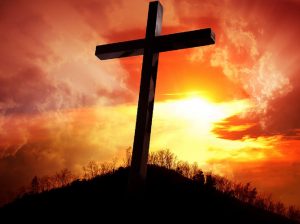
“He is not here; He is risen!”
(Luke 24:6; Matthew 28:6)

Fear, confusion, and wonder filled their hearts as the reality of the risen Lord began to unfold.

From that moment forward, everything changed. The risen Christ revealed Himself to His followers—not as a distant memory, but as the living God and Savior (John 20:14–16, 19–20). He called them by name, walked with them, taught them, and opened their understanding. Their doubt was transformed into faith, their fear into boldness, and their despair into unshakable hope (Luke 24:27, 32, 45; John 20:19–21, 27–28).

This same risen King now calls us to live in the light of His victory.

Because Easter is not merely a celebrated day to remember, but a truth to embrace—a living reality that shapes how we think, live, and believe. Because He lives, we are no longer bound by sin, defined by our past, or without hope for the future.

As we reflect on the empty tomb, we are reminded that we serve a Savior who keeps His promises. The One who rose from the grave has also promised to return (Acts 1:9–11).

Thus, we live as a people set apart—watching, waiting, and preparing our hearts as we anticipate the glorious appearing of our Lord and King. Especially in light of the unrest in the Middle East.

Jesus is coming again, and very soon!

While reading Leviticus 20:26: “You shall be holy to Me, for I, the LORD, am holy, and have separated you from the peoples to be Mine,” I was reminded of our Lord’s command in Matthew 5:48: “Be perfect, therefore, as your heavenly Father is perfect.”

Some challenge the idea of Christian holy living by pointing to examples of moral failure, while others excuse themselves by saying, “Nobody’s perfect.”  Those who reject the call to holiness fail to realize that it is our eternal God and risen Savior who commands us—whether we choose to accept His authority or not.

When someone says, “I’m not a pedophile, a rapist, a murderer, or a drug dealer—so I’m not a bad person,”  it reveals a flawed way of thinking about sin. it usually suggests that somehow sin is measured on a “sliding scale,” and that “our good deeds outweigh our bad deeds.” But Scripture teaches that sin isn’t graded on a curve. Sin separates us from God, and no amount of good works can outweigh it.

It also leans on the false notion that our good deeds can somehow outweigh or cancel out our failures. But, this reasoning collapses in the face of Jesus Christ, our perfect and holy standard.

Our righteousness, compared to His, is utterly void—even on our best day. We have a sin problem that yields a sobering reality: apart from Christ, we face eternal separation from God.

Yet God, in His great love, has made a way. Through His Spirit, He draws us to humbly and sincerely seek the only remedy—grace through faith in Jesus Christ.

“But God, who is rich in mercy, because of His great love with which He loved us, even when we were dead in trespasses, made us alive together with Christ (by grace you have been saved), and raised us up together, and made us sit together in the heavenly places in Christ Jesus, that in the ages to come He might show the exceeding riches of His grace in His kindness toward us in Christ Jesus.”    (Ephesians 2:4–7)

His Spirit within us creates a growing desire for His mercy and sustaining power, enabling us to live for Christ daily. This new, Spirit-led life flows from genuine faith in Christ alone. It transforms us from the inside out and makes us acceptable to God despite our human weakness.

In His perfection, God also provides every spiritual resource we need to be conformed to the image of Christ. As the Apostle John reminds us, when we see Him in glory, “we shall be like Him.” (Romans 8:29; 1 John 3:2).

What an incredible privilege and responsibility we have. Not only do we bear the name of Christ as Christians, but we also reveal Him to others through our thoughts, words, and actions.

Jesus lives today—and His people can share His amazing love and righteousness  with the world!

As we prepare for Easter and look beyond, let us remember that we are called to be God’s holy people—set apart for Him and destined to share eternity in His presence. May we faithfully reflect the life of our Lord and Savior, Jesus Christ, to a world in need, as we watch, wait, and prepare for His promised return.

May this Easter also serve to renew our faith, strengthen our witness, and deepen our longing for the day when we will see Him face to face. Won’t you receive Him today?

What a Wonderful Savior!

An Eventful Week

For April 3, 2026
On Sunday, during the Triumphal Entry, crowds filled the streets of Jerusalem, heralding Jesus Christ as Messiah. (Matthew 21:9) By Monday, the Lord had cleansed the Temple of those accursed vendors. (Matthew 21:12) On Tuesday, He silenced disputes concerning His authority and taught openly about His Kingdom. (Matthew 21:23-27) Later, a woman—identified in John’s Gospel as Mary—anointed Him with costly oil. (John 12:3) In the midst of mounting tension, He quietly arranged for a furnished room to observe the Passover.

Now it was Thursday evening of Passover week and the Disciples longed for a break, a pause to celebrate God’s past deliverance. The Passover Seder was meant to be a joyful, familiar gathering in what would later be called the Upper Room. (Luke 22:12)

But from the outset, something was different….

After settling a dispute over Kingdom greatness (Luke 22:24-27), Jesus did the unthinkable—He washed their feet. (John 13:4-5) Then He then foretold their coming desertion, Peter’s denial (and restoration), and revealed that one among them would betray Him. (Matthew 26:31-35, Luke 22:31-34) Judas departs into the night. (John 13:30)

What should have been a peaceful observance was now a gathering heavy with tension. And then, something even more extraordinary happened. Instead of following the traditional Seder liturgy, Jesus took the bread, blessed it, broke it, and gave it to the Eleven, saying,

“Take, eat; this is My body.”
(Matthew 26:26, Mark 14:22)

Then He took the cup, gave thanks, and said,

“Drink from it, all of you. For this is My blood of the new covenant, which is shed for many for the remission of sins… Do this in remembrance of Me.”     (Matthew 26:27-28, Luke 22:20

The familiar had become prophetic.

As they sang a hymn and followed Him toward the Mount of Olives, one can only imagine the questions racing through their minds: Why did He change the Seder? What did He mean—His body? His blood? Within hours, they would begin to understand.

What makes this moment even more profound is that Jesus was not walking blindly into suffering. He knew exactly what lay ahead—and Scripture had already foretold it.

Psalm 22 gives us a window into the suffering of the Messiah—a passage written almost a thousand years before His birth, yet vividly describing the crucifixion.

“My God, My God, why have You forsaken Me?”
(Psalm 22:1)

These are the very words Jesus would cry from the cross. Psalm 22 continues with uncanny precision:

      • Mockery from onlookers, scorn from the crowd—“He trusts in the Lord; let Him rescue Him.” (Psalm 22:7-8)
      • His hands and feet are pierced. (Psalm 22:16)
      • His bones are exposed. (Psalm 22:17)
      • His garments are divided, and lots are cast. (Psalm 22:18)

This is not coincidence. This is divine revelation. Even before the cross, the suffering of Christ was written—so that when it came to pass, we would recognize the Savior. And yet, Psalm 22 does not end in despair. It rises to triumph:

“All the ends of the world shall remember and turn to the Lord.”
(Psalm 22:27)

The Suffering Servant shall become the Victorious King! What was Jesus thinking as He broke that bread and shared the cup?  Scripture gives us the answer:

“You see, at just the right time, when we were still powerless, Christ died for the ungodly… But God demonstrates His own love for us in this: while we were still sinners, Christ died for us”    (Romans 5:6–8).

From the first Adam came sin, corruption, and death. God created us for holiness and eternal fellowship, yet through disobedience, sin entered the world—and with it, separation from God.

We all bear that stain. Like a white garment ruined by a single stain, our righteousness is polluted by sin. No matter how good we appear, our best efforts fall short before a holy God. As Scripture says:

“All our righteous acts are like filthy rags.”
(Isaiah 64:6)

What we could never accomplish, Christ fulfilled perfectly. He lived without sin. He went to the cross willingly. And through His sacrifice, He made a way to restore what was lost:

“For God so loved the world that He gave His only begotten Son, that whoever believes in Him should not perish but have everlasting life. For God did not send His Son into the world to condemn the world, but that the world through Him might be saved.”   (John 3:16-17)

This is the glory of the Gospel. Jesus did not merely die for the worthy, the righteous, or the deserving. He died for the ungodly—for rebels, for sinners, for enemies of God. He died for all of us, and this is where the message becomes personal.

It is not difficult to imagine sacrificing for someone we love. But to lay down one’s life for those who reject, mock, or hate us—that is beyond human comprehension or instinct.

Yet this is what Christ did for each of us.

In a world increasingly marked by indifference to human dignity—where the unborn, the elderly, and the vulnerable are often discarded—His sacrifice stands in stark contrast. Humanity may assign value based on convenience or cost, but God has declared the worth of every life through the cross. We have reduced life to transactions. Christ redeemed it with His blood.

No longer are we bound by sin, Satan, and death. Through faith in Jesus Christ, His finished work becomes our righteousness. The cross is not merely an event—it is the dividing line of eternity.

And Psalm 22 reminds us: suffering was not the end of the story. Victory was always in the forefront and would be realized in just three days:

“Looking unto Jesus, the author and finisher of our faith, who for the joy that was set before Him endured the cross, despising the shame, and has sat down at the right hand of the throne of God.”     (Hebrews 12:2)

Won’t you trust Christ today and experience His great love and forgiveness personally?

What a Wonderful Savior!

Top